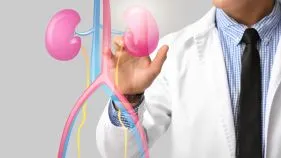
URS Kidney Stone Removal: Procedure, Recovery, Risks, and Expert Kidney Stone Care
Introduction
Kidney stones can cause sudden and severe pain, blood in the urine, nausea, vomiting, and difficulty passing urine. When a stone does not pass naturally or creates an obstruction, a procedure may be required to remove it.
URS kidney stone removal, also known as ureteroscopy, is a minimally invasive procedure commonly used to treat stones located in the kidney or ureter. During the procedure, a thin instrument called a ureteroscope is passed through the natural urinary passage to reach the stone. Depending on the size and location of the stone, it may be removed with a basket or broken into smaller fragments using laser energy.
At Prabhakar Bhurke Clinic, our super specialist nephrologist, Dr. Sandip Prabhakar Bhurke, provides comprehensive evaluation and medical management for patients with kidney stones. When a procedure is required, appropriate urology specialists can be involved for definitive stone removal and procedural care.
What Is URS Kidney Stone Removal?
URS stands for ureteroscopy. It is a minimally invasive technique used to diagnose and treat stones in the urinary tract.
A small ureteroscope is inserted through the urethra and bladder and advanced into the ureter or kidney. The stone can then be:
-
Removed directly using a specialized basket
-
Broken into smaller pieces using laser lithotripsy
-
Fragmented and removed from the urinary tract
Unlike traditional open surgery, URS does not usually require an external incision.
When Is URS Recommended for Kidney Stones?
Not every kidney stone requires surgery. Some small stones may pass naturally with observation, appropriate pain management, and medical treatment.
URS may be considered when:
-
The stone is unlikely to pass naturally
-
Pain continues despite medical treatment
-
The stone blocks urine flow
-
The stone causes hydronephrosis
-
The stone is associated with recurrent urinary problems
-
A stone remains despite observation
-
ESWL is unsuitable or has not successfully cleared the stone
-
The stone is located in an area where ureteroscopy offers a suitable treatment approach
-
There is a need for definitive stone removal
The recommended treatment depends on stone size, location, composition, urinary anatomy, kidney function, and the patient's overall health.
How Does URS Kidney Stone Removal Work?
The procedure is generally performed under anesthesia.
Step 1: Preoperative Evaluation
Before URS, the treating team may perform:
-
Urine testing
-
Blood tests
-
Kidney function tests
-
Ultrasound
-
Non-contrast CT scan when appropriate
-
Assessment of stone size and location
If a urinary infection is suspected, it should be appropriately evaluated and treated before elective stone manipulation.
Step 2: Ureteroscope Insertion
A thin ureteroscope is carefully passed through:
Urethra → Bladder → Ureter → Kidney
The doctor uses the instrument to visualize the stone.
Step 3: Stone Fragmentation
If the stone is too large to remove directly, it may be broken into smaller fragments using laser lithotripsy.
The fragments can then be removed or allowed to pass naturally, depending on the clinical situation.
Step 4: Stone Extraction
Small stone fragments may be removed using a specialized retrieval basket.
The treating urologist aims to clear the obstructing stone while minimizing injury to the urinary tract.
Step 5: Ureteral Stent Placement
In some patients, a temporary ureteral stent may be placed after the procedure.
A stent can help maintain urine drainage while the ureter heals and swelling settles.
Not every patient requires a stent, and the decision depends on the procedure and individual circumstances.
URS With Laser Lithotripsy
Laser lithotripsy is commonly used when a stone needs to be fragmented.
The laser energy breaks the stone into smaller pieces that can either be retrieved during the procedure or pass through the urinary tract afterward.
Laser treatment may be useful for stones that are difficult to remove as a single piece.
The choice of technique depends on:
-
Stone size
-
Stone location
-
Stone composition
-
Urinary anatomy
-
Previous treatments
-
Kidney function
-
Patient-specific factors
Is URS Better Than ESWL?
URS and Extracorporeal Shock Wave Lithotripsy (ESWL) are different approaches to kidney stone treatment.
URS
-
Uses a scope passed through the urinary tract
-
Can directly visualize the stone
-
Allows stone fragmentation and extraction
-
Often provides a more direct approach to certain ureteral and kidney stones
-
May require a temporary ureteral stent
ESWL
-
Uses shock waves from outside the body
-
Breaks the stone into smaller fragments
-
Does not require insertion of a ureteroscope
-
Effectiveness can depend on stone size, location, density, and body anatomy
Neither procedure is automatically best for every patient. A specialist should determine the appropriate option after evaluating the stone and the patient's medical condition.
What Happens After URS?
Recovery varies from person to person.
Some patients experience temporary:
-
Burning during urination
-
Frequent urination
-
Urinary urgency
-
Mild blood in the urine
-
Flank discomfort
-
Bladder discomfort
These symptoms can be more noticeable when a ureteral stent has been placed.
Your treating doctor will provide specific instructions regarding medicines, activity, hydration, and follow-up.
How Long Does Recovery Take After URS?
Many patients can return to normal activities relatively quickly after uncomplicated ureteroscopy, although the exact recovery period varies.
Recovery depends on:
-
Number of stones treated
-
Stone size and location
-
Whether laser fragmentation was required
-
Whether a stent was inserted
-
Presence of infection or obstruction
-
Overall health
Follow-up imaging or testing may be recommended to confirm that the stone has been adequately cleared.
Ureteral Stent After URS
A temporary ureteral stent may be placed after URS to support urine drainage.
Patients with a stent may notice:
-
Urinary frequency
-
Urgency
-
Mild discomfort
-
Flank pain during urination
-
Small amounts of blood in the urine
The stent should be removed or exchanged according to the schedule provided by the treating urologist.
Do not leave a temporary stent in place longer than instructed.
Possible Risks of URS Kidney Stone Removal
Although URS is generally considered a minimally invasive procedure, complications can occur.
Potential risks include:
-
Urinary tract infection
-
Blood in the urine
-
Temporary urinary discomfort
-
Ureteral irritation
-
Ureteral injury
-
Residual stone fragments
-
Stent-related symptoms
-
Need for another procedure in selected cases
-
Rare ureteral narrowing or stricture
Your treating specialist will discuss the potential risks and expected benefits before the procedure.
When Should You Seek Urgent Medical Attention After URS?
Contact your treating medical team promptly or seek urgent care if you develop:
-
Fever or chills
-
Severe or worsening pain
-
Persistent vomiting
-
Difficulty passing urine
-
Very low or absent urine output
-
Heavy bleeding or blood clots in urine
-
Severe weakness or dizziness
Fever after a urinary tract procedure can sometimes indicate infection and should not be ignored.
How Is a Kidney Stone Diagnosed Before URS?
Accurate diagnosis helps determine whether URS is appropriate.
Imaging
Doctors may use:
-
Kidney ultrasound
-
X-ray in selected situations
-
Non-contrast CT scan
CT can provide detailed information about stone size, location, and urinary obstruction.
Blood Tests
Testing may include:
-
Serum creatinine
-
eGFR
-
Electrolytes
-
Complete blood count when indicated
Urine Tests
Urine evaluation may include:
-
Urinalysis
-
Urine microscopy
-
Urine culture when infection is suspected
The results help guide safe treatment planning.
Can Every Kidney Stone Be Treated With URS?
No.
Treatment depends on the individual stone and patient.
Other management options may include:
-
Observation
-
Medical expulsive therapy for selected ureteral stones
-
ESWL
-
RIRS
-
PCNL
-
Other urological procedures when clinically appropriate
A small stone may not need an invasive procedure, while a large or obstructing stone may require active treatment.
URS for Different Stone Sizes
Stone size is an important factor when selecting treatment.
Small Stones
Some small stones may pass naturally, particularly when located in the ureter.
Medium Stones
Treatment may be considered if the stone causes persistent pain, obstruction, infection, or fails to pass.
Larger Stones
Larger kidney stones may require procedures such as URS/RIRS, ESWL, or PCNL depending on their size and location.
The decision should not be based on size alone.
Can URS Remove Kidney Stones Permanently?
URS can remove the treated stone, but it does not necessarily prevent new stones from forming in the future.
Patients who have recurrent stones may benefit from evaluation for underlying risk factors.
Depending on the stone type and clinical history, the doctor may recommend:
-
Stone analysis
-
Blood tests
-
24-hour urine testing
-
Dietary assessment
-
Evaluation for metabolic risk factors
Identifying the reason stones are forming is important for long-term prevention.
Diet and Lifestyle After Kidney Stone Treatment
Stone prevention should be individualized because different types of stones have different risk factors.
General measures may include:
-
Drink fluids as recommended by your doctor.
-
Reduce excessive salt intake.
-
Maintain an appropriate dietary calcium intake.
-
Avoid excessive intake of highly processed foods.
-
Maintain a healthy body weight.
-
Stay physically active.
-
Follow stone-specific dietary recommendations when available.
-
Attend follow-up appointments.
Patients with chronic kidney disease or other medical conditions may need different fluid and dietary recommendations.
Role of a Nephrologist in Kidney Stone Care
A nephrologist specializes in kidney health and kidney function.
For patients with recurrent kidney stones, a nephrologist can help evaluate:
-
Kidney function
-
Blood pressure
-
Metabolic risk factors
-
Recurrent stone formation
-
Associated kidney disease
-
Long-term prevention strategies
A urologist generally performs procedures such as ureteroscopy and laser stone removal.
At Prabhakar Bhurke Clinic, our super specialist nephrologist, Dr. Sandip Prabhakar Bhurke, can evaluate kidney health and coordinate appropriate specialist care when procedural stone removal is required.
Why Choose Prabhakar Bhurke Clinic?
Patients choose Prabhakar Bhurke Clinic for:
-
Consultation with a super specialist nephrologist
-
Comprehensive kidney and urinary evaluations
-
Kidney function assessment
-
Personalized kidney stone management
-
Recurrent stone evaluation and prevention
-
Guidance regarding appropriate stone treatment options
-
Dialysis and advanced kidney disease management when required
-
Kidney transplant evaluation and long-term kidney care
-
Coordination with appropriate urology specialists for procedures
Our approach focuses on identifying the cause of kidney problems, protecting kidney function, and providing individualized medical guidance.
Frequently Asked Questions About URS Kidney Stone Removal
Is URS kidney stone removal painful?
URS is generally performed under anesthesia, so patients do not normally feel the procedure itself. Temporary discomfort, urinary burning, urgency, or flank discomfort may occur during recovery, particularly when a stent is present.
How long does URS take?
The procedure duration varies according to stone size, number, location, and complexity. Your treating urologist can provide a more accurate estimate after reviewing your scans.
Is a stent always required after URS?
No. Some patients need a temporary ureteral stent, while others may not. The decision depends on the condition of the ureter, stone treatment, obstruction, and other procedural factors.
Can kidney stones come back after URS?
Yes. URS removes the treated stone but does not eliminate the risk of future stone formation. Preventive evaluation is especially important for patients with recurrent stones.
Is URS better than ESWL?
Neither treatment is universally better. The appropriate choice depends on stone size, location, density, anatomy, kidney function, previous treatment, and other factors.
Can URS be used for stones inside the kidney?
Yes. Ureteroscopy can be used to reach and treat selected kidney stones. A related approach called Retrograde Intrarenal Surgery (RIRS) uses flexible ureteroscopy to access stones within the kidney.
Conclusion
URS kidney stone removal is a minimally invasive treatment that allows selected kidney and ureteral stones to be directly visualized, fragmented, and removed. It can be particularly useful when a stone is unlikely to pass naturally, causes persistent symptoms, creates urinary obstruction, or requires definitive treatment.
The choice between URS, laser lithotripsy, ESWL, RIRS, PCNL, observation, or other approaches depends on the individual patient's stone characteristics and overall health.
At Prabhakar Bhurke Clinic, Dr. Sandip Prabhakar Bhurke, our super specialist nephrologist, provides comprehensive kidney evaluation, medical management, recurrent stone prevention, and guidance regarding appropriate treatment. When procedural stone removal is needed, care can be coordinated with the appropriate urology specialist.
Book an Appointment Today
If you have kidney stones, severe flank pain, recurrent stones, blood in the urine, urinary obstruction, high creatinine levels, or repeated urinary problems, consult the team at Prabhakar Bhurke Clinic. Our super specialist nephrologist, Dr. Sandip Prabhakar Bhurke, can assess your kidney health, review your investigation results, and guide you toward an appropriate treatment and long-term prevention plan.
Medical Disclaimer
This article is intended for general educational and informational purposes only. It does not replace consultation, diagnosis, or treatment from a qualified healthcare professional. URS, laser lithotripsy, ESWL, RIRS, PCNL, and other kidney stone treatments may not be appropriate for every patient. Treatment decisions should be made after evaluation of the stone's size, location, obstruction, infection status, kidney function, and overall health. If you have severe pain, fever, chills, difficulty passing urine, persistent vomiting, or significantly reduced urine output, seek urgent medical attention.