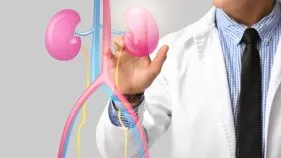
Kidney stone pain can be sudden, intense, and difficult to tolerate. It often occurs when a stone moves from the kidney into the ureter and interferes with normal urine flow. The pain may begin in the side or back and can travel toward the lower abdomen or groin.
People searching for kidney stone pain relief often want immediate ways to reduce discomfort. While some measures can help temporarily, effective treatment depends on the stone's size, location, type, and whether it is causing obstruction or infection.
At Prabhakar Bhurke Clinic, Dr. Sandip Prabhakar Bhurke, a super specialist nephrologist, evaluates kidney stone-related problems, kidney function, recurrent stone risk factors, and associated complications. When a stone requires a procedure, appropriate urology specialists can be involved.
Why Do Kidney Stones Cause Severe Pain?
A kidney stone may cause pain when it moves through the urinary tract or blocks urine flow.
Pain can result from:
-
Ureteral spasm
-
Stretching of the urinary tract
-
Pressure caused by obstruction
-
Movement of the stone
-
Associated inflammation
Kidney stone pain is often called renal colic.
It may come in waves and can change location as the stone moves.
Where Is Kidney Stone Pain Usually Felt?
Kidney stone pain commonly starts around the:
-
Side of the back
-
Flank
-
Area below the ribs
As the stone moves down the ureter, discomfort may spread toward:
-
Lower abdomen
-
Groin
-
Pelvic region
The location can vary depending on where the stone is located.
Common Symptoms Along With Kidney Stone Pain
Kidney stones may cause:
-
Severe flank pain
-
Back pain
-
Pain radiating toward the groin
-
Blood in the urine
-
Nausea
-
Vomiting
-
Burning during urination
-
Frequent urge to urinate
-
Difficulty passing urine
Some stones cause no symptoms and are discovered during imaging performed for another reason.
Kidney Stone Pain Relief at Home
Home measures may provide temporary comfort for selected patients, but they should not replace medical evaluation when symptoms are severe.
Rest and Comfortable Positioning
During an episode of renal colic, resting in a comfortable position may help you cope with the pain.
Unlike many muscle-related back problems, kidney stone pain may continue regardless of position.
Appropriate Fluid Intake
Adequate fluid intake may be helpful for some patients, particularly when a small stone is expected to pass naturally.
However, forcing large amounts of water quickly is not a safe treatment for everyone.
If a stone is causing significant urinary obstruction, excessive fluid intake may increase discomfort. People with advanced kidney disease, heart problems, or fluid restrictions also need individualized fluid advice.
Drink fluids according to your doctor's recommendation.
Warmth for Comfort
A warm compress or heating pad applied carefully to the painful area may provide temporary comfort for some people.
It does not remove the stone or treat an obstruction.
Avoid excessive heat that could cause burns.
Medicines for Kidney Stone Pain Relief
Pain medicines are commonly used during renal colic, but the appropriate medicine depends on the patient's kidney function, medical history, other medicines, and the cause of pain.
Nonsteroidal Anti-Inflammatory Drugs
NSAIDs can be effective for renal colic in many patients.
However, they may be unsafe in people with:
-
Significant kidney disease
-
Acute kidney injury
-
Dehydration
-
Certain stomach or cardiovascular conditions
-
Specific medication interactions
Patients with kidney problems should not routinely self-medicate with NSAIDs without medical advice.
Other Pain Medicines
When NSAIDs are unsuitable or insufficient, a doctor may consider alternative pain-relief medicines.
The choice depends on the individual patient's circumstances.
Do not exceed the recommended dose of any pain medicine.
Can Medicines Help the Stone Pass?
Some patients with smaller ureteral stones may be suitable for medical expulsive therapy.
Certain medicines can relax the ureter and may improve the likelihood of passage in selected situations.
Whether such treatment is appropriate depends on:
-
Stone size
-
Stone location
-
Degree of obstruction
-
Kidney function
-
Symptoms
-
Presence or absence of infection
A doctor should determine whether observation and medication are appropriate.
How Long Does Kidney Stone Pain Last?
The duration of pain varies.
A small stone that passes naturally may cause intermittent symptoms until it leaves the urinary tract. Larger or obstructing stones may cause persistent or recurrent pain and may require active treatment.
Pain severity alone cannot determine the size of the stone.
Imaging is often necessary to understand the stone's location and whether urine flow is obstructed.
When Does Kidney Stone Pain Require Urgent Treatment?
Seek urgent medical attention if kidney stone pain occurs with:
-
Fever
-
Chills
-
Severe weakness
-
Persistent vomiting
-
Difficulty passing urine
-
Very low urine output
-
Severe or worsening pain
-
A single functioning kidney
-
Known urinary obstruction
Kidney Stone With Fever Can Be an Emergency
A blocked urinary system combined with infection can become a serious medical emergency.
In such situations, antibiotics alone may not be enough. Urgent drainage of the obstructed urinary system may be required, followed by definitive stone treatment once clinically appropriate.
Do not try to manage suspected infected obstruction with home remedies alone.
How Is the Cause of Kidney Stone Pain Confirmed?
A doctor may recommend several investigations.
Urine Testing
Urine tests can identify:
-
Blood
-
Infection
-
Crystals
-
Protein
-
Other abnormalities
A urine culture may be recommended when infection is suspected.
Blood Tests
Depending on the clinical situation, tests may include:
-
Serum creatinine
-
eGFR
-
Electrolytes
-
Calcium
-
Uric acid
-
Complete blood count
These investigations help evaluate kidney function and identify complications.
Ultrasound
Ultrasound can help detect:
-
Kidney stones
-
Hydronephrosis
-
Urinary obstruction
-
Changes in kidney structure
CT Scan
A non-contrast CT scan may be recommended when more detailed information about a stone is required.
It can help determine:
-
Stone size
-
Stone location
-
Number of stones
-
Degree of obstruction
The choice of imaging depends on the patient's circumstances.
When Is Kidney Stone Removal Needed?
Not every kidney stone requires immediate removal.
Observation may be appropriate for selected small stones that are likely to pass and are not causing complications.
Active treatment may be considered when there is:
-
Persistent or severe pain
-
Significant obstruction
-
Infection
-
Reduced kidney function
-
A stone unlikely to pass naturally
-
Recurrent complications
-
Increasing stone burden
The treatment decision should be based on imaging and clinical evaluation.
Procedures Used for Kidney Stone Treatment
When active stone removal is required, treatment may include:
ESWL
Extracorporeal Shock Wave Lithotripsy (ESWL) uses externally generated shock waves to break selected stones into smaller fragments.
Its suitability depends on stone size, location, composition, anatomy, and other factors.
Ureteroscopy and Laser Lithotripsy
During ureteroscopy, a thin scope is passed through the urinary tract to reach the stone.
A laser can fragment the stone into smaller pieces for removal or passage.
This procedure is generally performed by a urologist.
RIRS
Retrograde Intrarenal Surgery (RIRS) uses a flexible ureteroscope to reach stones inside the kidney.
Laser energy is commonly used to fragment the stone.
RIRS may be considered for selected kidney stones depending on their size and location.
PCNL
Percutaneous Nephrolithotomy (PCNL) is commonly considered for larger or complex kidney stone burdens.
A small access tract is created through the skin into the kidney so the stone can be fragmented and removed.
A urologist generally performs PCNL.
Can Kidney Stone Pain Be Prevented?
Yes. Recurrence can often be reduced through appropriate prevention strategies.
Depending on the stone type and metabolic evaluation, recommendations may include:
-
Maintaining appropriate fluid intake
-
Reducing excessive dietary sodium
-
Maintaining a balanced diet
-
Avoiding excessive intake of certain stone-forming foods when medically indicated
-
Maintaining normal dietary calcium unless advised otherwise
-
Managing obesity and metabolic risk factors
-
Completing metabolic stone evaluation when recommended
Prevention should be tailored to the type of stone rather than based on a single universal diet.
Does Lemon Water Cure Kidney Stones?
Lemon water is sometimes promoted as a natural kidney stone treatment.
Citrus beverages can provide citrate, which may help reduce the risk of some types of stones.
However, lemon water should not be considered a guaranteed way to dissolve or remove an existing kidney stone.
Most common kidney stones cannot simply be dissolved with drinks or home remedies.
Selected uric acid stones may be dissolved through medically supervised urine alkalinization, but this requires appropriate diagnosis and monitoring.
Can Herbal Remedies Provide Kidney Stone Pain Relief?
There is no universally proven herbal remedy that reliably removes kidney stones or provides safe treatment for renal colic.
Some herbal products may:
-
Interact with prescribed medicines
-
Contain uncertain ingredients
-
Affect kidney function
-
Delay appropriate treatment
Do not replace medical evaluation with herbal or “kidney cleansing” products.
Kidney Stone Care at Prabhakar Bhurke Clinic
At Prabhakar Bhurke Clinic, Dr. Sandip Prabhakar Bhurke, a super specialist nephrologist, can evaluate kidney stone-related kidney problems and help identify factors that may affect kidney health.
Assessment may include:
-
Review of symptoms
-
Kidney function testing
-
Urine evaluation
-
Blood pressure assessment
-
Review of imaging reports
-
Evaluation of recurrent stone risk
-
Metabolic assessment when appropriate
-
Guidance regarding prevention
-
Coordination with urologists when stone removal is required
The goal is to relieve symptoms safely, protect kidney function, and reduce the risk of recurrent stones and complications.
Frequently Asked Questions
What is the fastest way to get kidney stone pain relief?
Appropriate medical pain management can provide effective relief. The safest option depends on your kidney function, medical history, and other medicines. Do not take large doses of painkillers without medical advice.
Can drinking water stop kidney stone pain?
Water does not directly stop renal colic. Appropriate hydration may support passage of selected small stones, but forcing excessive water can be harmful when significant obstruction or fluid restrictions are present.
Should I use a heating pad for kidney stone pain?
A warm compress may provide temporary comfort, but it does not remove the stone or treat an obstruction.
Can a 4 mm kidney stone pass naturally?
A 4 mm stone may pass naturally in many patients, particularly depending on its location. Medical evaluation is still useful to confirm that it is not causing significant obstruction or infection.
When should I go to the hospital for kidney stone pain?
Seek urgent care for severe pain accompanied by fever or chills, persistent vomiting, difficulty passing urine, very low urine output, or other signs of serious illness.
Can kidney stones cause blood in the urine?
Yes. A stone can irritate the urinary tract and cause visible or microscopic blood in the urine.
Which doctor treats kidney stones?
A nephrologist evaluates kidney function, metabolic risk factors, and associated kidney disease. A urologist generally performs procedures such as ureteroscopy, RIRS, ESWL, or PCNL when stone removal is required.
Conclusion
Kidney stone pain relief depends on the severity of symptoms, stone size and location, kidney function, and whether complications such as obstruction or infection are present. Appropriate pain management can provide relief, while selected small stones may pass naturally with medical guidance.
However, severe pain should not simply be masked with repeated painkillers. Fever, chills, persistent vomiting, difficulty urinating, or very low urine output may indicate a serious complication requiring urgent treatment.
At Prabhakar Bhurke Clinic, Dr. Sandip Prabhakar Bhurke, a super specialist nephrologist, provides comprehensive evaluation of kidney stone-related problems, kidney function assessment, prevention guidance, and coordinated care with urology specialists when procedural stone treatment is needed.
Book an Appointment Today
If you are experiencing kidney stone pain, severe flank pain, blood in the urine, nausea, vomiting, urinary difficulty, recurrent kidney stones, or abnormal kidney function tests, consult Dr. Sandip Prabhakar Bhurke, a super specialist nephrologist at Prabhakar Bhurke Clinic.
A detailed evaluation can help determine the cause of your pain, assess whether the stone is obstructing urine flow, provide appropriate relief, and guide you toward the right treatment.
Medical Disclaimer
This article is intended for general educational purposes only and does not replace professional medical advice, diagnosis, or treatment. Kidney stone pain can have different causes and may sometimes indicate urinary obstruction or infection requiring urgent care. Medication and fluid recommendations should be individualized according to kidney function, medical history, and other health conditions. Do not self-medicate or delay medical evaluation for severe or worsening symptoms.